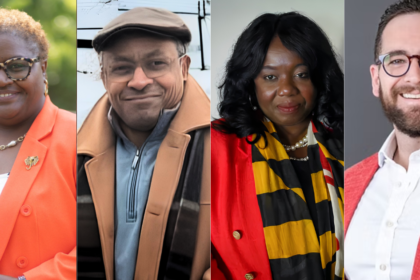


At an anti-ICE protest in downtown Sykesville, Maryland, a conversation unfolded that didn’t follow the usual script. No chanting. No shouting. Just questions — and some uncomfortable pauses.
In the video, a Black conservative interviewer approaches protesters to ask a simple thing: What does it actually mean to be anti-ICE? One protester argues that ICE represents a long history of exploitation and discrimination and should be abolished. He frames his position through personal experience — growing up gay, living through fear, and watching the country change in ways he never thought possible.
Then the conversation turns.
The interviewer brings up real cases — people in Maryland who were killed by illegal immigrants. Names the protester hasn’t heard before. That moment matters. Not because it proves a point, but because it exposes how disconnected the national narrative can be from local reality.

From there, the discussion moves into familiar territory: “jobs Americans don’t want to do.” But instead of letting it slide, the interviewer pushes back. Is that framing fair — or is it arrogant? Does it quietly suggest that some people are meant to do work others think is beneath them?
That question cracks the conversation wide open.
What follows is an unexpectedly thoughtful exchange about the trades, craftsmanship, integrity, and dignity of work. The protester, a longtime carpenter, talks about pride in doing honest work and how society has slowly stripped respect away from skilled labor. The interviewer agrees — arguing that trades are noble, valuable, and a path to independence, not something to dismiss.
They don’t agree on everything. But they agree on this: when we stop valuing work, we stop valuing people.
And that’s a conversation worth having.