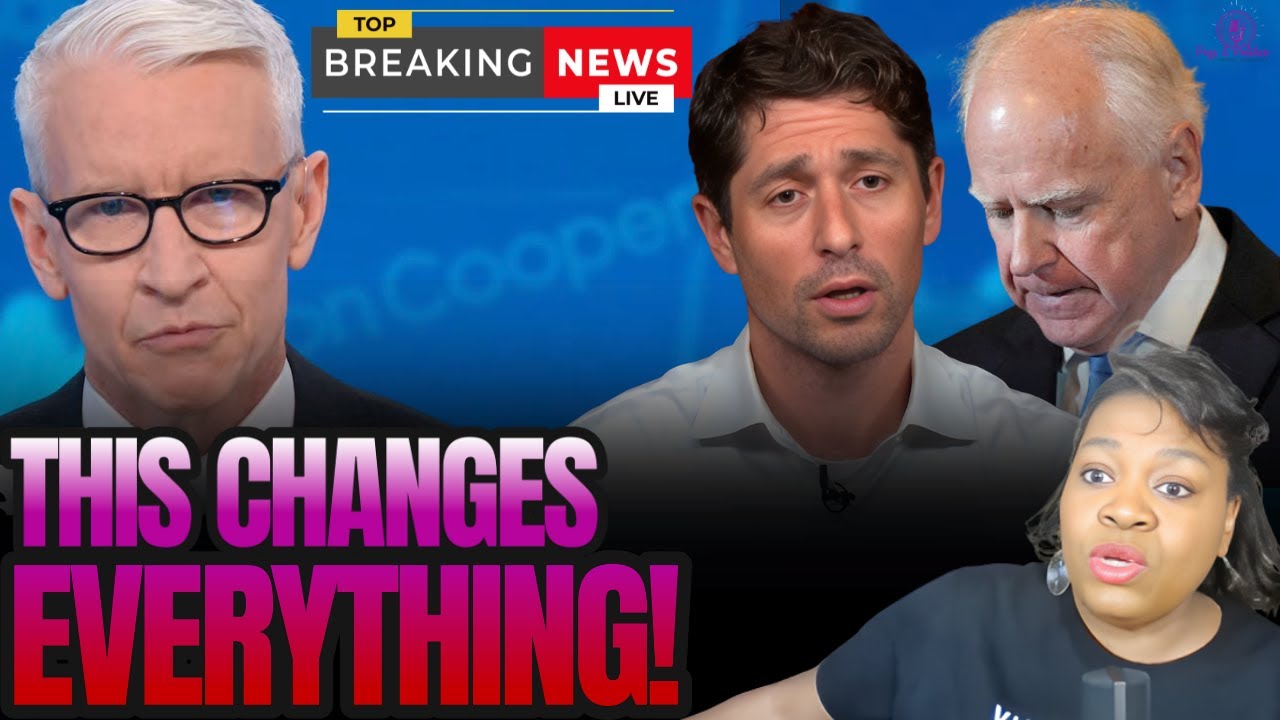



CNN didn’t bring Renee Good’s former father-in-law on air to hear a sermon. They brought him on because they wanted a spark—an emotional soundbite they could package into a familiar narrative: ICE bad, Trump cruel, protester sainted, and anyone questioning that storyline must be heartless.
But instead of outrage, they got something far more destabilizing to the media machine: composure.
Timmy Mlin didn’t perform. He didn’t rage. He didn’t demand revenge. He didn’t let the anchor steer him into a political tantrum. He spoke like a man who has been broken by real grief—and rebuilt by real faith. And because he wouldn’t follow the script, CNN’s entire posture started to look like what it often is: a producer-driven attempt to manufacture heat rather than reveal truth.
That’s what this episode exposed. Not just a tragedy in Minneapolis—but the way tragedy is weaponized.
Mlin acknowledged Renee’s humanity without canonizing her choices. He didn’t pretend she was flawless. He didn’t pretend the ICE agent was a cartoon villain. He described the moment like life actually happens: fast, chaotic, irreversible. That kind of honesty is intolerable to an ecosystem that survives on single-angle morality plays.
And what made his appearance even more inconvenient? He openly identified as a Trump supporter while still mourning Renee. That breaks the media’s preferred binary where compassion belongs to the Left and enforcement belongs to the Right. In real life, those categories don’t hold. People are more complicated than cable news can monetize.
The panel’s point was sharper: once activists move from “watching” to obstructing—using vehicles, blocking routes, baiting officers, escalating conflict—then what follows isn’t protest. It’s provocation. And provocation in a moment of force leads to outcomes nobody can reverse.
Then the conversation expanded where it needed to: sanctuary governance and federal funding. Cities that actively resist immigration enforcement want to keep cashing federal checks. That’s not “values.” That’s a grift. If your policies force the federal government to spend more, deploy more, and absorb more risk—while your city refuses to cooperate—you don’t get to claim moral high ground when the bill comes due.
This is the American fault line now: enforcement versus obstruction, sovereignty versus activism, law versus narrative. And the media keeps trying to convince the public that the only moral response is to sympathize with chaos and resent order.
But this interview—ironically—did the opposite. It reminded viewers that faith produces something the outrage economy can’t replicate: clarity, restraint, and accountability.
CNN wanted a villain.
They got a man with a Bible and a backbone.
And that’s why it hit so hard.