


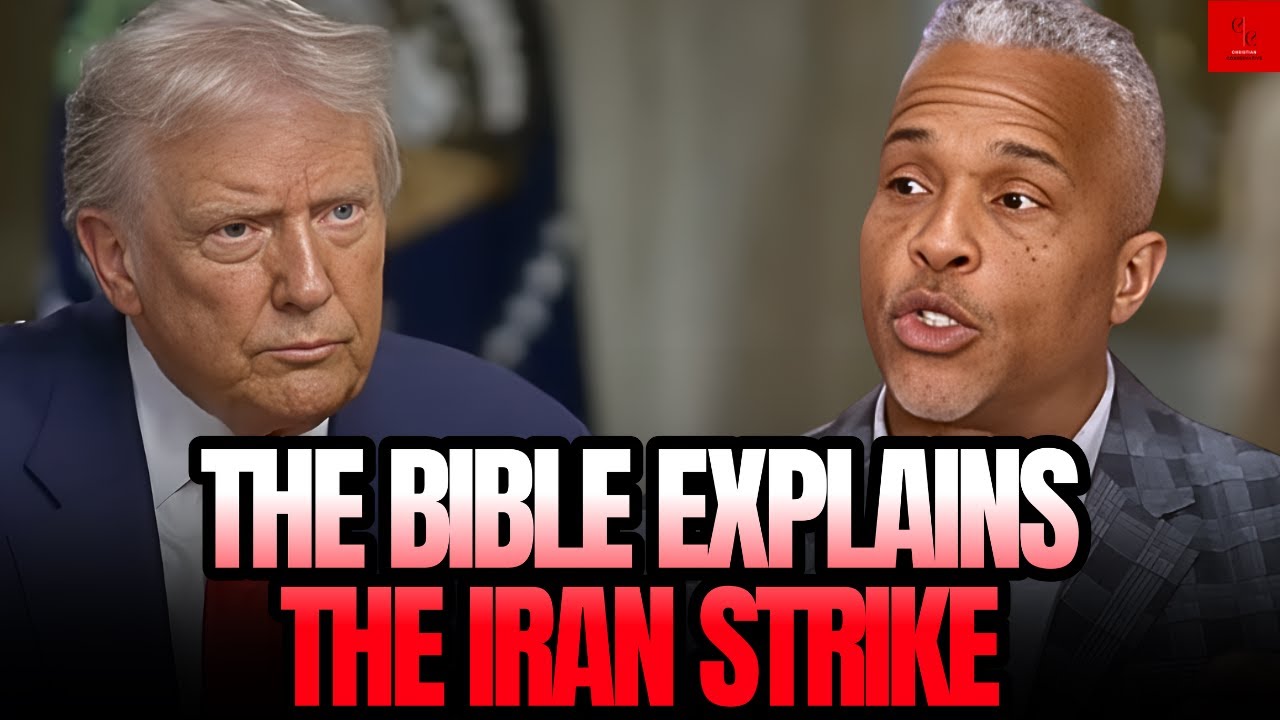
When the Headlines Hit Home, the Church Can’t Stay Quiet
There’s a moment that happens in every generation where evil stops being theoretical.
- When the Headlines Hit Home, the Church Can’t Stay Quiet
- Tragedy Doesn’t Schedule Itself Around Your Readiness
- When Violence Shows Up at Home, Pretending Gets People Killed
- The Strike in Iran Isn’t Just Geopolitics to Them—It’s a Spiritual Moment
- The “One Person” Principle: God Delays Judgment for Someone You Don’t See
- Dreams and Visions: The Underground Church as the Quiet Headline
- No Neutral Ground: Two Kingdoms, Two Sources, Two Destinations
- The Closing Message: Don’t Let End Times Talk Steal Your Peace
It stops being “out there,” on some distant battlefield, in some far-away nation, in some abstract debate between pundits who will never pay the price. It comes to your street. Your city. Your neighbor’s phone. Your own body.
And that’s the backbone of this episode: you don’t get to delay your theology until tragedy forces your hand.
Dennis Prager’s point—delivered through a hard personal lens—cuts straight through the comfortable lie most of us live with: we think we’ll deal with evil when it finally affects us personally. But when you wait for that day, you’re already late. That’s not wisdom. That’s denial with better branding.
KJ and Michelle take that premise and apply it to the moment they’re living in: violence at home, a strike overseas, spiritual warfare in the middle, and a public that still wants to treat it all like opinion.
Their message is simple: the time to confront evil is before it knocks.
Tragedy Doesn’t Schedule Itself Around Your Readiness
The opening exchange about suffering isn’t a soft intro—it’s a warning shot.
Because most people only develop convictions after the cost arrives. They need their own loss, their own crisis, their own “now I get it” moment. But if moral clarity only shows up after you’ve been wounded, you’re not leading—you’re reacting.
The episode argues that mature faith isn’t built on emotional proximity. It’s built on truth that stands even when it’s inconvenient—especially when it’s inconvenient.
If your convictions depend on personal pain to activate, then your convictions aren’t convictions. They’re moods.
When Violence Shows Up at Home, Pretending Gets People Killed
The show moves from principle to event: a mass shooting in Austin, details about the suspect, and the broader sense that the nation is on alert.
Whether every early detail holds up long-term or not, the posture of the hosts is what matters: they reject the instinct to treat everything as random, isolated, and unconnected. They see patterns. They ask what people refuse to ask. And they call out how quickly propaganda tries to rewrite the public’s interpretation before the public even understands what happened.
You can agree or disagree with the framing—but their underlying claim is clear:
If you’re always waiting for “the full story” before you speak, you’ll be silent forever. Because there will always be one more detail to delay your courage.
The Strike in Iran Isn’t Just Geopolitics to Them—It’s a Spiritual Moment
Here’s where the episode becomes what it actually is: a faith-and-news analysis show that refuses to treat world events as spiritually neutral.
KJ and Michelle don’t only debate the strike in political terms. They ask what few people ask out loud:
- What does it mean when a regime that has persecuted believers loses power?
- What does it mean when a closed nation becomes more exposed?
- What does it mean when Christians inside and outside the region interpret these events through revival, missions, and the spread of the gospel?
They highlight an argument repeated through multiple clips: that God’s purposes often operate through nations, leaders, empires, and collapses—without God endorsing every sin those leaders possess.
That’s a hard concept for modern minds because we’ve been trained to think in binaries:
“If God uses it, God approves it.”
That’s not biblical. That’s childish.
The Bible is filled with God using flawed rulers to accomplish real outcomes.
The “One Person” Principle: God Delays Judgment for Someone You Don’t See
One of the strongest threads in the episode is the idea that God’s strategy often revolves around the “one.”
Not because the masses don’t matter—but because God refuses to treat individual souls like collateral.
They reference examples like Lot being removed before judgment and Moses interceding for a nation. The application they draw is direct and convicting:
What if the reason something hasn’t collapsed yet is because of someone praying inside it?
What if the reason God is allowing pressure is because He’s extracting people before judgment?
In other words: history is not just about empires. It’s about rescue.
That’s the interpretive lens they keep returning to: not “who wins,” but “who gets saved.”
Dreams and Visions: The Underground Church as the Quiet Headline
The episode also leans into reports of people in closed regions encountering Christ through dreams and visions, and it frames that as evidence that the gospel is not stoppable.
Even when missionaries can’t enter openly, the hosts argue that God is not limited by borders, surveillance, or regimes. They present the idea that revival can grow underground—quietly, painfully, and powerfully—until conditions shift and what was hidden becomes visible.
Their call to the audience isn’t passive inspiration. It’s participation:
Don’t just watch the headlines. Pray.
Don’t just analyze the war. Intercede.
Don’t just doomscroll. Stand.
No Neutral Ground: Two Kingdoms, Two Sources, Two Destinations
The episode takes a hard theological stance: there is no spiritual neutrality.
Either God is your source, or something else is.
Either you are in the light, or you are in the dark.
That is blunt—and it’s meant to be.
They reject the comfortable American religion of “good person” spirituality and return to a biblical framework: fallen man defaults toward judgment, and salvation is not earned by vibes. It is received through Christ.
You can feel the urgency underneath it. They’re not doing abstract doctrine. They’re pleading for clarity.
The Closing Message: Don’t Let End Times Talk Steal Your Peace
The final segment is pastoral in the truest sense: Michelle warns against becoming overwhelmed by the flood of information and the chaos of the moment.
She argues that the enemy thrives on distraction and despair—two things that can look like “being informed” while actually producing paralysis.
Her prescription is old-school and steady:
- stay faithful
- do what you can today
- pray for protection and leadership
- keep joy
- keep your eyes on Christ
It’s not escapism. It’s spiritual discipline.
The world may shake, but your assignment doesn’t change.