


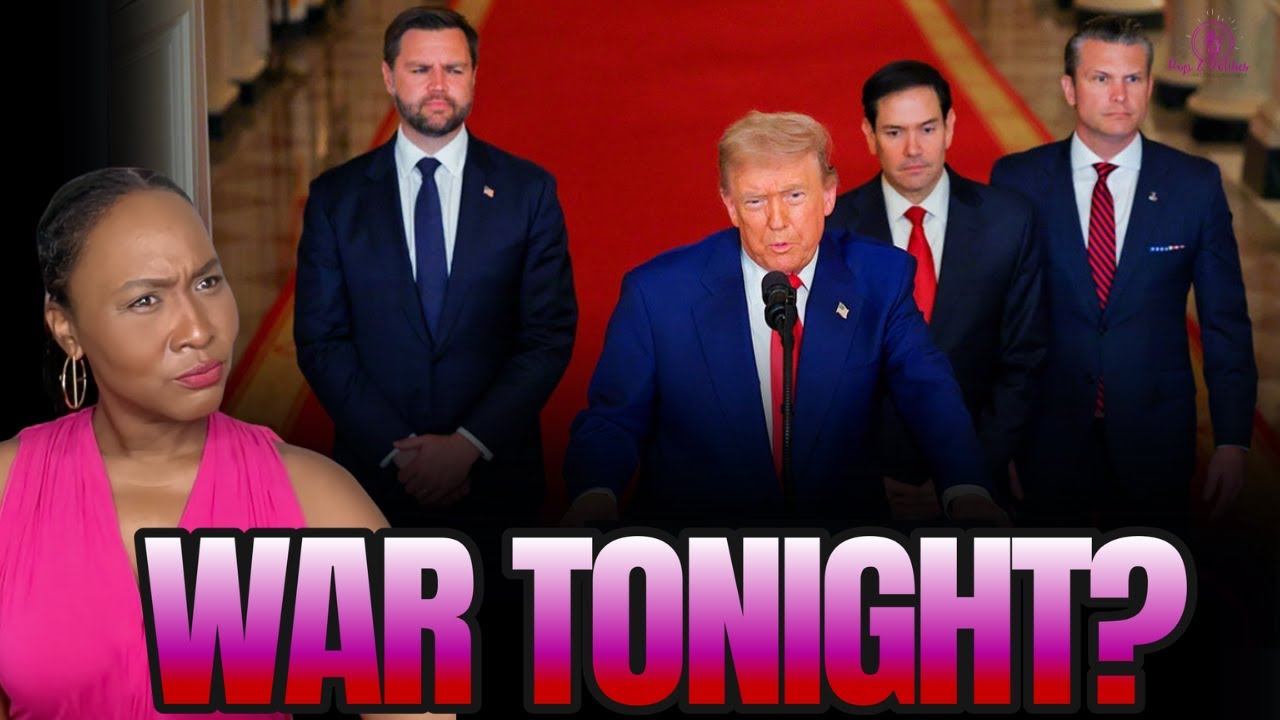
Trump Declares Iran “Decimated” as Operation Epic Fury Enters Final Phase
Donald Trump delivered a forceful national address outlining what he described as the near-total dismantling of Iran’s military capabilities—marking a dramatic turning point in U.S. foreign policy and a defining moment in modern Middle East strategy.
- Trump Declares Iran “Decimated” as Operation Epic Fury Enters Final Phase
- From Deterrence to Direct Action
- Military Success—and a Warning
- The Economic Reality Behind the Conflict
- Why the Timeline Matters
- The Strategic Stakes
- A Turning Point for U.S. Foreign Policy
- Conclusion: Finish the Mission—or Risk Everything
Speaking just one month after launching Operation Epic Fury, Trump claimed Iran’s navy has been destroyed, its air force crippled, and its missile infrastructure largely eliminated. The mission, he argued, is simple: prevent Iran from ever obtaining a nuclear weapon—and finish the job before the threat can re-emerge.
The message was unmistakable. This is not a limited strike. It is a full-scale effort to permanently neutralize what Trump called “the world’s number one state sponsor of terror.”
From Deterrence to Direct Action
For decades, U.S. presidents have warned that Iran cannot be allowed to develop nuclear weapons. Trump’s argument is that those warnings were never backed by meaningful action—until now.
He pointed to earlier decisions, including the elimination of Qassem Soleimani and the withdrawal from the Iran nuclear deal, as foundational steps. But according to the address, the current campaign represents something far more decisive.
After a prior strike—Operation Midnight Hammer—reportedly destroyed Iran’s nuclear sites, intelligence indicated the regime began rebuilding elsewhere. That, Trump said, forced a second phase: Operation Epic Fury.
The implication is clear. This conflict is not reactive—it is preemptive. The goal is not containment, but elimination of capability.
Military Success—and a Warning
Trump described the campaign in sweeping terms, claiming unprecedented battlefield success in just weeks. Whether or not those claims withstand independent verification, the strategic message is unmistakable: the United States intends to dominate the conflict quickly and decisively.
But the address also included a warning.
If Iran refuses to negotiate, Trump signaled that additional targets—including the country’s energy infrastructure—remain on the table. That escalation could have far-reaching consequences, not just for Iran, but for global energy markets and geopolitical stability.
At the same time, Trump emphasized that regime change was not the stated objective—though he acknowledged that Iran’s leadership has effectively been wiped out during the operation.
The Economic Reality Behind the Conflict
Critics have pointed to rising gas prices as evidence that the conflict is already impacting Americans at home. Trump addressed that directly, attributing price spikes to Iranian attacks on oil tankers and disruptions in key shipping routes.
Central to that discussion is the Strait of Hormuz—a narrow but critical corridor through which a significant portion of the world’s oil supply flows.
Trump’s argument is that the United States is uniquely positioned to weather the disruption. Thanks to increased domestic production, he claimed, America no longer depends on Middle Eastern oil—a strategic advantage that allows for more aggressive action abroad.
That claim aligns with broader conservative arguments favoring energy independence as both an economic and national security priority.
Why the Timeline Matters
One of the most striking elements of the address was Trump’s comparison to past wars.
He noted that major conflicts—from World War II to Vietnam—dragged on for years, even decades. By contrast, he framed the Iran campaign as a rapid, high-impact operation that has achieved significant results in just over 30 days.
The underlying message: this is not another endless war.
Supporters argue that speed and overwhelming force reduce long-term risk. Critics, however, warn that early victories can create false confidence—especially in a region known for prolonged instability.
The Strategic Stakes
At its core, the conflict centers on two critical questions:
Can Iran be permanently prevented from acquiring nuclear weapons?
Trump’s strategy suggests that only direct military action—not diplomacy—can achieve that goal.
What happens if the U.S. stops too soon?
Some analysts warn that leaving Iran partially intact could allow it to rebuild quickly, potentially emboldening future aggression.
There is also the broader concern of deterrence. If the U.S. pulls back prematurely, adversaries may interpret that as weakness—raising the risk of future conflicts.
A Turning Point for U.S. Foreign Policy
Trump’s address signals a clear shift away from the post-Cold War model of cautious engagement and toward a more aggressive doctrine of preemptive force.
For urban conservatives, the implications are significant. National security, energy independence, and economic stability are tightly linked—and this conflict sits at the intersection of all three.
The argument from the administration is straightforward: a nuclear Iran is an unacceptable risk, and delaying action only increases the cost.
Conclusion: Finish the Mission—or Risk Everything
The success or failure of Operation Epic Fury will ultimately be judged not by early battlefield gains, but by what follows.
If Iran’s capabilities are truly dismantled, the operation could redefine American strength on the world stage. If not, it risks becoming another chapter in a long history of unresolved Middle East conflicts.
For now, the administration is asking for time—and resolve.
The question for Americans is whether they are willing to see the mission through to completion, or risk leaving the job unfinished.