

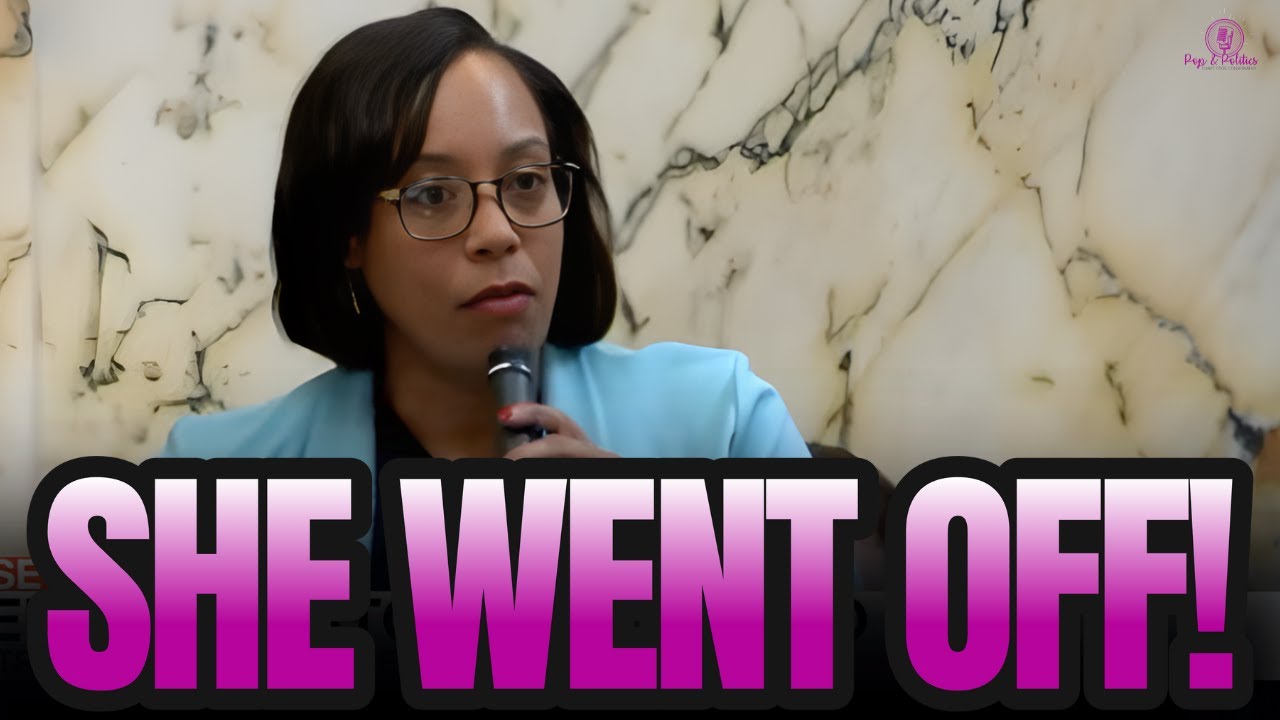
In a moment that cut straight through Annapolis theater, Maryland Delegate Latoya Nkongolo delivered a speech that Democrats didn’t expect and couldn’t easily dismiss. As lawmakers rushed through a mid-cycle redistricting map pushed by Governor Wes Moore, Nkongolo stood firm and called the effort exactly what it was: political power consolidation dressed up as reform. Her message was simple, direct, and devastating—this map wasn’t about fairness or equity, it was about silencing voters who don’t fall in line.
As Nkongolo later summarized the moment herself: “Redistricting is voter suppression. Republicans and many Dems thanked me for speaking up.”
“Redistricting is voter suppression. Republicans and many Dems thanked me for speaking up.”
Delegate LaToya Nkongolo
That single sentence tells you everything the official narrative won’t.
Black Voters Are Not a Monolith
One of the most striking elements of Nkongolo’s testimony was her refusal to accept the tired framing that assumes Black voters belong to one political party. She reminded the chamber—and the public—that Black Americans are Democrats, independents, and Republicans, and that the fastest-growing segment of Black voters nationwide is moving away from automatic party loyalty.
She spoke from lived experience, describing the regular calls she receives from frustrated Black Democrats asking how to get involved with the Republican Party. Their frustration isn’t ideological—it’s practical. Failing schools, rising crime, higher taxes, and cost-of-living pressures don’t disappear just because politicians repeat the same talking points. Voters want results, not assumptions about how they’re supposed to vote.
Mid-Cycle Redistricting Is Not Democracy
The Maryland House passed HB 488 by a 99–37 party-line vote, approving a map that redraws all eight congressional districts to favor Democrats and all but eliminate the state’s lone Republican-held seat. That alone should raise red flags. But the deeper issue is timing.
Mid-cycle redistricting undermines voter confidence by changing the rules after elections have already occurred. When district lines are rewritten simply because one party doesn’t like the outcome, elections stop meaning what they’re supposed to mean. Nkongola called this out plainly, warning that manipulating maps midstream destabilizes the electoral system and prioritizes party advantage over representation.
Equity as a Political Weapon
Supporters of the map repeatedly framed it as an act of racial justice, claiming it protected Black voices. Nkongolo dismantled that argument in real time. Voter suppression doesn’t magically become equity when it’s wrapped in progressive language. When district lines are manipulated to dilute the voices of Republicans—Black, white, Hispanic, or otherwise—that isn’t justice. It’s disenfranchisement.
True representation means communities with shared concerns choosing leaders who actually reflect their priorities. Forcing urban enclaves into rural districts doesn’t create fairness—it erases it. Different communities have different needs, and pretending otherwise only benefits political operatives, not voters.
Three Weeks Lost While Maryland Burns
Perhaps the most damning critique was about priorities. Nearly one-fifth of Maryland’s 90-day legislative session was spent fast-tracking this map while real issues went untouched. Skyrocketing energy bills. Crushing taxes and fees. A rising cost of living. Failing public schools. Cuts to services for residents with developmental disabilities.
Marylanders didn’t send lawmakers to Annapolis to play political chess with district lines. They sent them there to govern. When power games take precedence over affordability, education, and public trust, the message to voters is unmistakable: you come second.
Why This Moment Matters Beyond Maryland
Redistricting fights are happening across the country, but Maryland’s case stands out for its brazenness. It’s a reminder that gerrymandering is wrong no matter who does it and that unchecked power—especially in one-party states—always leads to abuse.
Nkongolo’s speech resonated precisely because it wasn’t partisan theater. It was a defense of democratic principles and voter dignity. The quiet applause she received from members of both parties afterward tells a story the roll-call vote doesn’t.
The Real Takeaway
This wasn’t just a viral moment. It was a warning. When politicians assume voters belong to them by default, democracy erodes. When equity is used as a shield for power grabs, trust collapses. And when elected officials finally say the quiet part out loud, it exposes how fragile the narrative really is.
Maryland may be deep blue, but moments like this prove that dissent still exists—and that truth still has a way of cutting through, even in rooms designed to silence it.