

Why Christians Are Raising Alarm Over Tucker Carlson, Candace Owens, and Islam-Friendly Messaging
A growing number of Christian conservatives are sounding the alarm over what they see as an increasingly dangerous trend inside right-wing media: the blurring of theological lines between Christianity and Islam. The concern is not simply political. For many believers, it is deeply prophetic.
The controversy intensified after comments promoted by Tucker Carlson about Islam’s reverence for Jesus began circulating online. Carlson highlighted that Muslims believe Jesus will return to defeat the Antichrist, framing it as common ground between Christians and Muslims. To many casual listeners, that may sound harmless. But critics argue it leaves out a critical theological divide that changes everything.
In Islamic teaching, Jesus is not the crucified and resurrected Son of God described in the New Testament. Islam teaches that Jesus was never crucified, never died for humanity’s sins, and will eventually return to correct Christians for what Islam considers false beliefs about him. That distinction is central to why many Christians see attempts to merge the two faiths as spiritually deceptive rather than unifying.
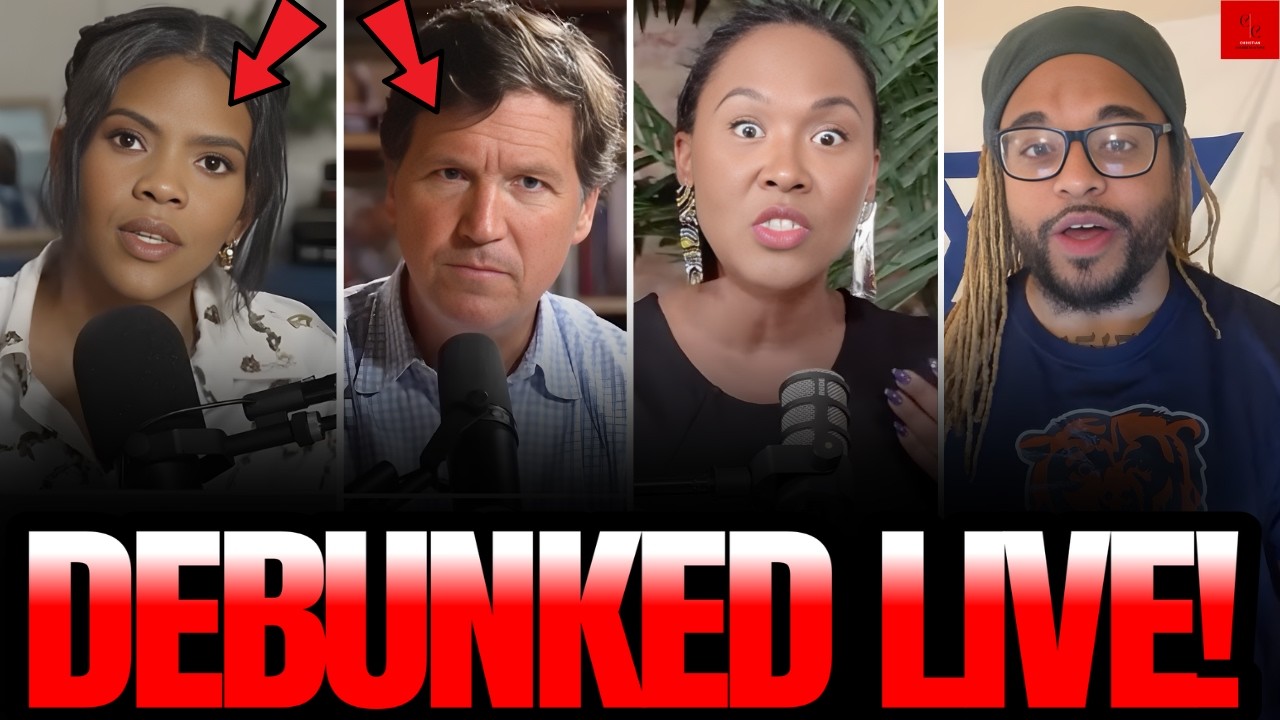
This debate has become especially heated as major conservative personalities increasingly praise Islamic culture, criticize Christianity’s Jewish roots, or promote interfaith language centered on “shared values” instead of doctrinal truth. Critics point to Tucker Carlson’s repeated comments admiring Islamic societies, as well as Candace Owens’ growing focus on Catholic mysticism, Marian devotion, and anti-Israel rhetoric, as signs of a broader ideological shift.
For many evangelical Christians, the concern goes beyond politics and enters the realm of biblical prophecy.
The Book of Revelation describes a coming false religious system tied to a global political order. Christians who study end-times prophecy often point to passages describing a “false prophet” who performs signs and deceives nations into accepting a counterfeit spiritual authority. They argue that modern media personalities may be helping prepare audiences for exactly that kind of religious confusion by normalizing theological contradictions in the name of unity.
The issue becomes even more explosive when discussions turn to Israel.
A major theme throughout the conversation surrounding Tucker Carlson and Candace Owens is the growing hostility toward Israel within sections of conservative media. Critics argue that many influencers are attempting to disconnect Christianity from its Jewish foundation while simultaneously softening attitudes toward Islam. That matters because Christianity itself emerged from Judaism. Jesus, the apostles, and the early church were all Jewish, and the entire framework of biblical prophecy is rooted in Israel’s history and covenant relationship with God.
For Christians who take biblical prophecy seriously, this trend aligns with passages such as Zechariah 12, which warns that nations will eventually gather against Jerusalem. As anti-Israel sentiment spreads across both the political left and right, some believers see current events as part of a larger prophetic realignment already underway.
Another flashpoint in the debate involves the Islamic figure known as the Mahdi. In Islamic eschatology, the Mahdi is expected to establish global Islamic rule before the end of the world. Some Christian prophecy teachers argue that similarities between Islamic end-times expectations and biblical descriptions of the Antichrist are too significant to ignore. They point to themes like global religious control, persecution, beheadings, and the enforcement of ideological submission as evidence of troubling overlap.
That concern has only intensified as Western societies grow more secular and spiritually confused. Many Christians believe modern culture is becoming increasingly hostile to biblical truth while simultaneously embracing vague spirituality detached from doctrine.
The result is a dangerous environment where celebrity commentators, political influencers, and media figures can begin functioning as unofficial spiritual authorities without theological accountability.
For Christian conservatives, that is the real warning behind the controversy surrounding Tucker Carlson and Candace Owens. The issue is not whether Muslims are kind people or whether Christians should treat others with dignity and respect. Christianity commands believers to love their neighbors. The concern is whether truth itself is being diluted in pursuit of political alliances, media influence, or global religious unity.
As debates over Israel, Islam, and biblical prophecy continue to intensify, many believers are urging Christians to return to Scripture rather than placing blind trust in political celebrities or internet personalities. In an era shaped by confusion, influence, and ideological manipulation, discernment may become more important than ever.