

Why More Americans Are Rejecting Victimhood Politics and Demanding Accountability
A growing number of Americans, including many black voters, are questioning whether decades of racial grievance politics have produced meaningful results. Instead of improving communities, critics argue that the constant focus on victimhood, historical grievances, and racial division has distracted from the issues that matter most: family stability, personal responsibility, public safety, education, and economic opportunity.
That debate took center stage during a recent discussion featuring commentator Andre Williams, who argued that many of the challenges facing black communities today are cultural rather than political. His central point was straightforward: communities cannot thrive when crime, family breakdown, government dependency, and destructive behavior are excused rather than confronted.
Williams’ comments struck a nerve because they challenged a narrative that has dominated American politics for decades. The traditional activist model often frames social outcomes through the lens of systemic oppression and historical injustice. Critics of that approach argue that while past discrimination is real and worthy of study, it cannot serve as a permanent explanation for present-day failures.
The debate became even more relevant in the wake of the Karmelo Anthony case, which reignited arguments about race, criminal justice, and media narratives. Rather than focusing exclusively on the facts of the case, many activists immediately framed the outcome as evidence of racial injustice. Critics pushed back, arguing that turning every high-profile criminal case into a racial flashpoint only deepens division and prevents honest discussion about personal accountability.
This tension highlights a broader political reality. Americans are increasingly skeptical of professional grievance merchants who appear whenever a controversial case emerges. Whether it is activists, media personalities, or political operatives, many voters believe there is an industry built around keeping racial resentment alive.
That skepticism is not limited to conservatives. Even some black Americans have begun openly questioning whether victimhood politics has become a trap rather than a solution. The argument is simple: if a community is constantly told that outside forces are responsible for every setback, individuals lose the incentive to take ownership of their own future.
Critics also point to the growing disconnect between elite activists and ordinary Americans. Many of the loudest voices speaking on behalf of minority communities live far removed from the neighborhoods they claim to represent. Meanwhile, residents living in those communities often express concerns about crime, failing schools, economic stagnation, and family breakdown – issues that rarely receive the same attention as politically useful racial controversies.
The debate extends beyond criminal justice. It also surfaced during recent arguments over Black History Month, museum exhibits, and claims that black history is being erased from public life. Opponents of those claims note that major institutions, memorials, museums, and educational programs dedicated to African American history remain intact. What has changed, they argue, is the rejection of ideological frameworks that portray American history exclusively through oppression and victimhood.
At its core, this conversation is about accountability. Can a society address historical wrongs without becoming trapped by them? Can communities acknowledge challenges without blaming every problem on racism? And can political leaders offer solutions instead of simply reinforcing grievances?
For many Americans, the answer increasingly appears to be yes.
The growing backlash against racial grievance politics reflects a broader desire for responsibility, self-improvement, and cultural renewal. Voters across racial lines are showing less interest in excuses and more interest in results. They want safer neighborhoods, stronger families, better schools, and economic opportunity – not another round of political blame-shifting.
As the political landscape continues to evolve, the leaders who succeed will likely be those who focus less on division and more on solutions. The future belongs to those willing to tell hard truths, promote accountability, and build communities capable of standing on their own.


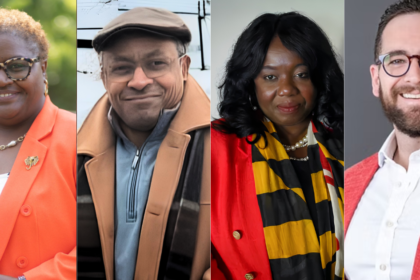



Black Voters, Victimhood Politics, and the Growing Backlash Against Racial Grievance Narratives
Americans are increasingly challenging victimhood narratives and calling for accountability, cultural reform, and stronger communities.