
Minnesota’s Feeding Our Future scandal is not just another government fraud story. It is a warning about what happens when taxpayer-funded programs grow too large, too loose, and too politically protected to be properly watched.
At the center of the renewed scrutiny is Rep. Ilhan Omar, who has been asked by Minnesota lawmakers to respond to questions about her communications related to the Feeding Our Future program. According to the transcript, lawmakers are seeking written and electronic correspondence involving Omar, the program, and the owners of Safari Restaurant, where Omar reportedly held campaign events. The restaurant’s owners have pleaded guilty in connection with the $250 million fraud scheme.
Omar’s allies have dismissed the questions as politically motivated. But that answer is not good enough for taxpayers.
When a quarter-billion dollars meant to feed children is allegedly siphoned through fake nonprofits, shell operations, and politically connected networks, public officials do not get to wave it away as partisan noise. They owe answers.
The larger issue is not only whether Ilhan Omar knew anything improper. It is whether Minnesota’s political class—under Gov. Tim Walz, Attorney General Keith Ellison, and state-level agencies—created an environment where fraud could flourish.
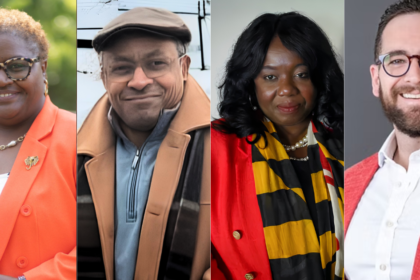
Nicole Bennett put it plainly: “Follow the money.” That should be the standard. Every dollar should be traced, every connected organization reviewed, and every public official who helped build or defend the system should be questioned.
This is where the Feeding Our Future scandal becomes a national story. These programs are often marketed with compassionate names: feeding children, helping families, supporting communities. But when oversight disappears, compassion becomes cover. The result is not help for the poor. It is enrichment for insiders.
Shelley E. raised the point many taxpayers are thinking: “Give us our money back.” That frustration is not symbolic. Americans are taxed at every level—income, property, sales, fees, licenses—and then told there is never enough money for veterans, seniors, infrastructure, border security, or working families.
Yet somehow, hundreds of millions can disappear through government programs before anyone in power notices.

That is why this scandal cannot be treated as isolated. Similar concerns are now being raised in other states, including Medicaid and social-service fraud involving shell companies and questionable billing practices. Whether it happens in Minnesota, Ohio, California, or Maryland, the pattern is the same: massive programs, weak guardrails, politically connected players, and taxpayers left holding the bill.
The political consequences could be significant. Donald Trump and Republicans have increasingly focused on fraud, waste, illegal immigration, and taxpayer abuse as central campaign issues. The Feeding Our Future scandal gives that message real-world force. It allows conservatives to argue that big government is not merely inefficient—it is vulnerable to organized exploitation.
That does not mean every person connected to these programs is guilty. It does mean public trust has been broken.
If Ilhan Omar had communications with people tied to the scandal, those communications should be disclosed. If state agencies ignored warning signs, those agencies should be held accountable. If political relationships protected bad actors, voters deserve to know.
The American people are not wrong to be angry. They are working harder, paying more, and watching government tell them to sacrifice while fraudsters allegedly treat public money like a private bank account.
This scandal is not just about Minnesota.
It is about whether government still works for taxpayers—or whether taxpayers now work for government insiders.