


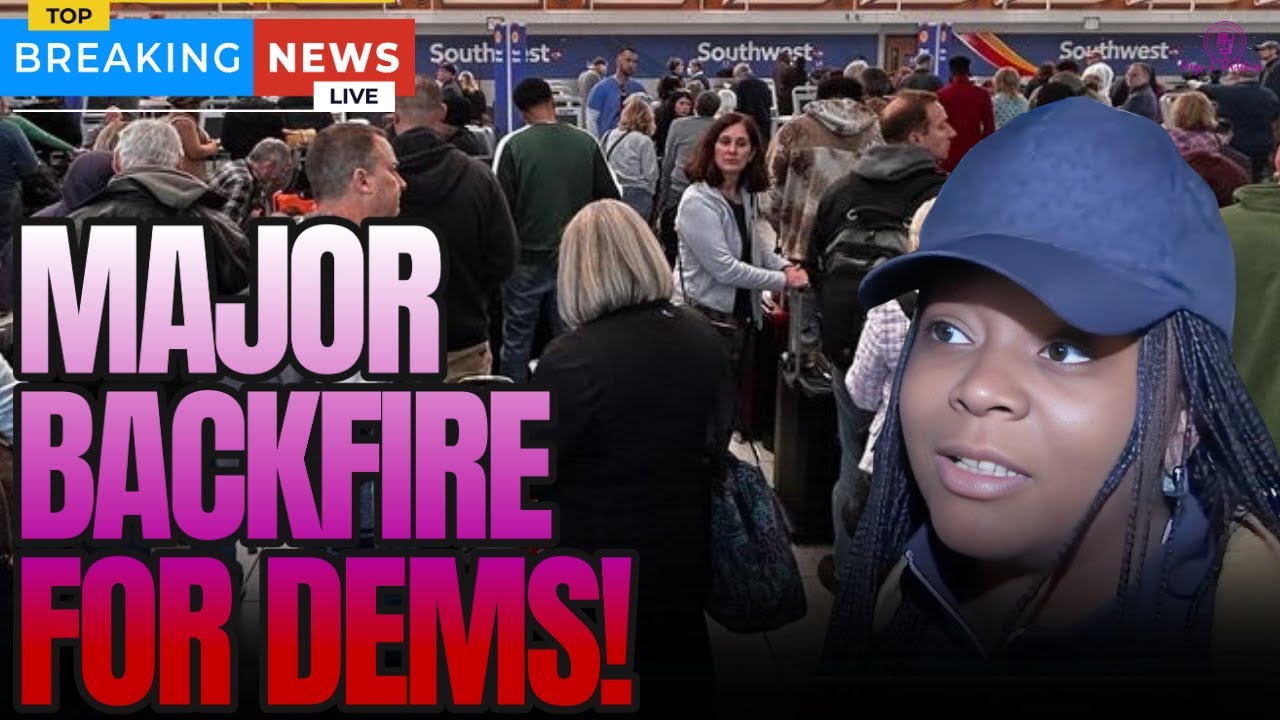
Trump Turns to ICE as Democrats’ DHS Standoff Sparks Airport Chaos, Immigration Fury
As airport security lines stretched for hours across the country and TSA agents worked without paychecks, the political battle over immigration and federal funding exploded into public view. The Trump administration responded by deploying ICE agents to major airports nationwide, framing the move as a direct answer to what conservatives see as reckless obstruction from Democrats refusing to pass a Department of Homeland Security funding bill.
The timing could not have been worse for travelers. Spring break crowds packed airports from Atlanta to Chicago as staffing shortages intensified. TSA callout rates surged while hundreds of employees reportedly quit amid the prolonged partial shutdown. Instead of backing down, President Donald Trump moved quickly to keep security checkpoints functioning by expanding ICE operations inside airports.
For many conservatives, the contrast could not be clearer. Trump focused on keeping airports operational while Democrats continued demanding immigration restrictions tied to sanctuary policies and limitations on ICE enforcement. Critics on the right argue the shutdown became less about government funding and more about protecting illegal immigrants from deportation efforts.
That frustration is growing well beyond airport delays.
The debate intensified after progressive lawmakers pushed for explicit bans preventing ICE from operating near schools, hospitals, churches, and even polling locations. Conservatives immediately questioned why federal immigration enforcement should be restricted in areas tied directly to public safety and election integrity.
At the same time, sanctuary city policies continue producing political fallout across the country.
In Chicago, outrage erupted after an illegal immigrant from Venezuela was charged in the murder of Loyola University student Sheridan Gorman. The case ignited national backlash after a local official appeared to dismiss the tragedy as “wrong place, wrong time.” Gorman’s family rejected that characterization, arguing the killing was entirely preventable and blaming sanctuary policies that allowed dangerous individuals to remain in American communities.
That case became a flashpoint because it reinforced what many urban conservatives have warned about for years: when local officials refuse to cooperate with ICE detainers, violent offenders often remain free until tragedy strikes.
The anger is not limited to immigration alone. Many Americans increasingly see a broader pattern of government prioritizing ideology over basic public order.
In Boston, city leaders approved millions in taxpayer-funded aid for illegal immigrants, including legal services and social support programs, even as local residents struggle with rising costs and shrinking public resources. Republican Senate candidate John Deaton argued that blue-state leadership has created a system where citizens are effectively competing against illegal immigrants for healthcare, housing, and taxpayer assistance.
Deaton’s comments reflect a growing political realignment happening in traditionally Democratic strongholds. Rising housing costs, strained schools, crime concerns, and taxpayer fatigue are pushing even moderate voters toward immigration enforcement and fiscal accountability.
The issue extends beyond immigration into broader questions about lawlessness and social disorder.
Cities like Washington, D.C., Atlanta, and Chicago are now dealing with massive “teen takeovers,” where hundreds of juveniles coordinate disruptive gatherings through social media. Businesses have suffered property damage, assaults, and lost revenue while city leaders struggle to respond. Atlanta officials recently announced they may begin charging parents connected to organized teen violence and property destruction.
For many voters, these incidents reinforce the same underlying concern: too many political leaders appear more focused on avoiding criticism than enforcing consequences.
That frustration also surfaced after President Trump reacted bluntly to the death of former FBI Director Robert Mueller. Trump’s comments sparked outrage from media critics, but many supporters viewed the response through the lens of years of investigations, raids, prosecutions, and political warfare tied to the Russia probe.
The broader political reality is becoming difficult to ignore. Americans are increasingly questioning where their tax dollars are going, why public systems appear strained, and why elected officials seem unable or unwilling to prioritize citizens first.
That is why immigration enforcement has become about far more than the border itself. It now touches airport security, crime, education, healthcare, taxes, elections, and public trust in government institutions.
The Trump administration clearly understands that dynamic. Rather than retreat from the fight, the White House appears determined to make immigration enforcement central to the national conversation heading into the next election cycle.
And in cities already overwhelmed by crime, rising costs, and collapsing confidence in leadership, that message is finding an increasingly receptive audience.