

Palm Sunday Exposed the Real Battle Behind America’s “No Kings” Movement
Palm Sunday has always been about a kingdom many people misunderstood.
More than 2,000 years ago, Jesus Christ entered Jerusalem riding on a donkey, fulfilling the prophecy in Zechariah 9:9. The crowds celebrated Him as king, waving palm branches and shouting “Hosanna.” But many of them expected political revolution, not spiritual salvation. They wanted a ruler who would overthrow Rome. Instead, Christ came to conquer sin.
That misunderstanding still defines much of modern America.
As Christians across the country celebrated Palm Sunday this year, major cities were flooded with “No Kings” protests aimed at President Donald Trump and the broader conservative movement. Protesters marched under banners rejecting authority while simultaneously waving communist symbols, socialist imagery, and radical ideological slogans. The contradiction could not have been clearer.
The issue is not that modern activists reject kings. It is that they reject any authority higher than themselves.
That is the deeper spiritual crisis unfolding beneath today’s political unrest.
Many Americans now embrace a worldview rooted entirely in self-worship. Scripture warned about this long ago. In 2 Timothy, believers are told that people in the last days would become “lovers of themselves.” That mindset is now embedded into nearly every cultural institution, from media to education to politics.
The irony surrounding the “No Kings” protests was impossible to ignore. Demonstrators denounced authoritarianism while openly promoting ideologies that historically produce centralized state control. Communist flags appeared throughout several rallies, including protests in New York City. The same activists claiming to oppose oppression were glorifying systems responsible for mass censorship, persecution, and government domination throughout the 20th century.
That contradiction reveals something important: when society rejects God, government inevitably fills the vacuum.
Communism, socialism, and Marxist ideology all promise justice, equality, and provision through the state. But in practice, government becomes the provider, the moral authority, and eventually the object of loyalty itself. Christianity teaches dependence on God. Radical political movements demand dependence on institutions.
That distinction matters.
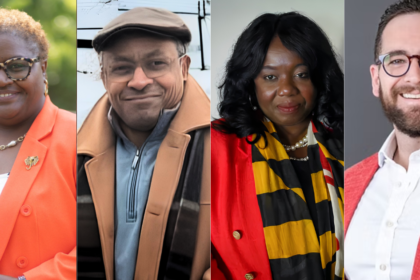
One of the most revealing moments from the weekend protests came when a white liberal protester claimed black Americans could not safely participate in demonstrations and therefore needed white activists to “walk in their name.” The statement perfectly captured the paternalism that increasingly defines modern progressive politics.
For years, conservatives have argued that many white liberals view minorities less as equals and more as political tools. Comments like these reinforce that perception. The rhetoric of empowerment often masks a deeper belief that certain groups are incapable of functioning without elite guidance.
At the same time, another reality has become harder to ignore: many of these protests are not organic.
Reports continue to surface showing activist organizations connected to massive donor networks spending billions organizing demonstrations, recruiting activists, and coordinating media messaging. Groups linked to billionaire-funded political operations have poured enormous resources into sustaining nationwide protest infrastructure.
That organization helps explain why many demonstrations appear highly scripted. Protesters frequently repeat identical talking points, avoid unsanctioned questions, and operate with coordinated messaging strategies. The modern activist class increasingly resembles a political industry rather than a grassroots movement.
But Palm Sunday also delivered a powerful contrast.
While activists filled streets chanting against authority, President Donald Trump shared a message from Franklin Graham directing people toward the Gospel of Jesus Christ. The letter emphasized a truth rarely spoken publicly by modern political leaders: salvation cannot be earned through status, wealth, success, or power. It comes only through faith in Jesus Christ.
In an era when most politicians avoid direct Christian truth claims, the moment stood out.
Whether critics like it or not, Trump has consistently spoken more openly about Christianity than nearly any modern president. He has referenced Jesus Christ directly, promoted faith initiatives, defended religious liberty, and repeatedly framed America as a nation that must remain rooted in God.
That matters because America’s political problems are increasingly spiritual problems first.
The cultural battle unfolding today is not simply Republican versus Democrat. It is a struggle between competing moral authorities. One side believes truth is defined by God. The other increasingly believes truth is self-created, emotionally driven, and enforced through political power.
Palm Sunday reminds Christians which kingdom ultimately matters.
Jesus did not come to seize earthly power through force. He came to save souls. And while political movements rise and fall, Scripture remains clear: every society eventually reflects the spiritual condition of its people.
America is now seeing the consequences of that truth in real time.




Palm Sunday, “No Kings” Protests, and the Spiritual Crisis Driving America’s Political Divide
Palm Sunday celebrations collided with anti-Trump “No Kings” protests, exposing a growing spiritual divide shaping America’s political and cultural future.