

A Constitution Without Limits Is a Constitution Without Meaning: A Black Conservative Perspective on Birthright Citizenship
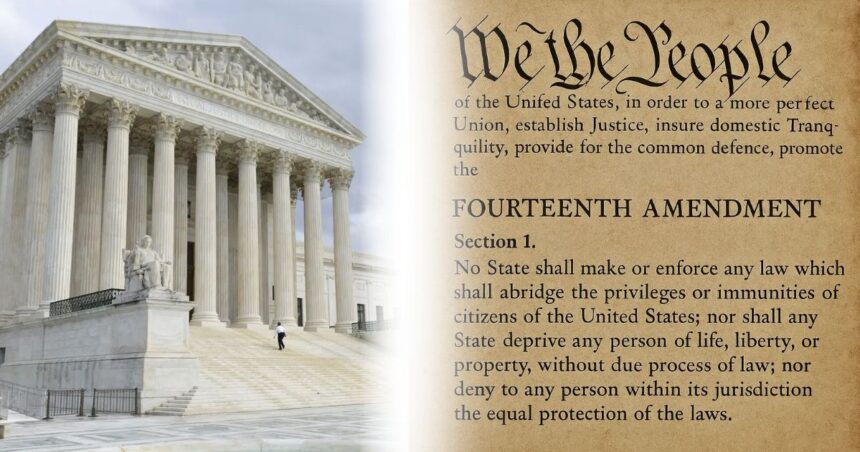
My ancestors were born on this soil for two hundred and forty-six years before this country would call them citizens. They were born in the tobacco fields and cotton rows of North Carolina. Birth on American soil meant nothing for a child born in bondage. It took a war, a proclamation, an amendment, and generations of blood to force this nation to admit that a person born here was, in fact, a person. That is the debt the Fourteenth Amendment was written to pay. So when the Supreme Court ruled 6-3 this week in Trump v. Barbara that the Fourteenth Amendment guarantees automatic citizenship to virtually every child born on American soil, regardless of whether their parents are here lawfully, unlawfully, or only passing through, I did not celebrate. Chief Justice Roberts anchored the majority opinion in the 1898 case of Wong Kim Ark and in the words of Reconstruction-era senators who spoke of extending citizenship to “every free-born person in this land.” I am disappointed. Not because I take the Fourteenth Amendment lightly — I take it more seriously than that.
The Fourteenth Amendment was not written as an abstraction. It was written in blood, in the aftermath of a war fought over whether Black people born on this soil, the descendants of the enslaved, would ever be counted as citizens at all. Before 1868, the Dred Scott decision had declared that Black Americans “had no rights which the white man was bound to respect.” The Citizenship Clause was Congress’s answer to that cruelty — a deliberate, textual repudiation of a system that had treated my ancestors as property rather than people. That is the amendment’s soul. It exists because this country once decided that birth on American soil meant everything for a plow horse and nothing for a Black child.
That history is precisely why I believe the Court’s ruling, however legally defensible under precedent, sits uneasily with the amendment’s original purpose. The framers were resolving a specific, searing injustice: the exclusion of freed people and their children from citizenship despite generations of forced labor and forced belonging in this nation. They were not, I would argue, contemplating a rule that would extend that same unconditional promise to the children of individuals who evaded immigration law altogether or never intended to make America their home. President Trump has made a version of this same argument: that birthright citizenship’s original purpose was noble but narrow, meant for the children of the formerly enslaved, not the entire world — and that the U.S. is nearly alone among nations in extending it unconditionally. Collapsing those two very different situations into a single, automatic rule stretches a remedy built for the descendants of slavery into a policy nobody in 1868 explicitly debated in those terms.
That distinction matters now more than ever. Illegal immigration carries real fiscal and social costs, and Black communities, often concentrated in the cities and job sectors most exposed to that strain, rarely get centered in this debate — yet we feel it directly. A rule written to repair the injustice of slavery should not be stretched to absorb the costs of a broken immigration system it was never built to address. My people did not immigrate here. We built this country under the whip, and the Fourteenth Amendment was late, hard-won recognition of that fact. It troubles me to watch that same clause now applied as though it were a generic, borderless rule of geography rather than a targeted act of justice for the formerly enslaved.
Black people have always understood that citizenship in this country was never simply given — it was fought for, litigated, marched for, and paid for in blood. That is why this ruling, and the debate surrounding it, deserves more than a cheer or a jeer. It deserves the same seriousness our ancestors brought to demanding that this Constitution finally mean what it said.