


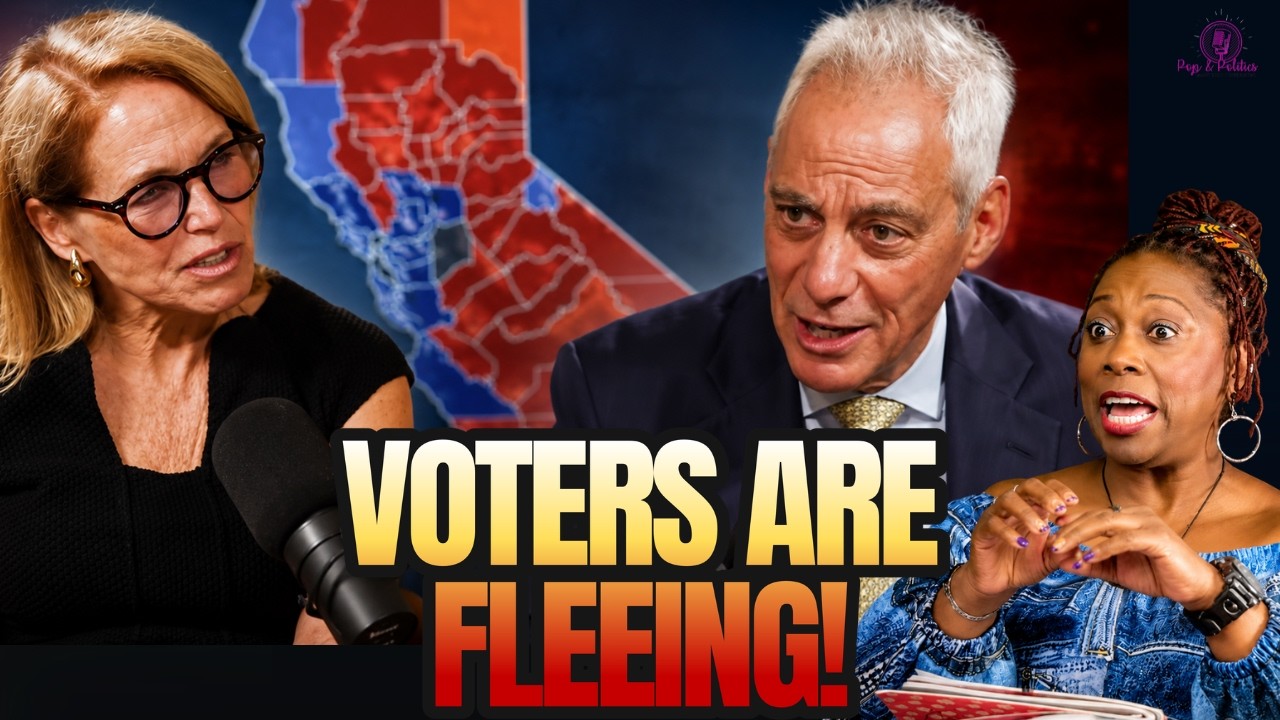
Why More Voters Are Leaving the Democratic Party—and Why Party Leaders Are Finally Admitting It
For years, Democratic leaders dismissed warnings that voters were growing frustrated with the party’s priorities. Now, even some of the party’s most prominent insiders are acknowledging what many Americans have been saying for a long time: the Democratic Party has lost touch with the issues that matter most to working families.
The warning did not come from a conservative activist or a Republican strategist. It came from former Chicago Mayor Rahm Emanuel, a longtime Democratic power broker who bluntly argued that the party earned much of the public’s dissatisfaction by focusing on cultural battles while neglecting bread-and-butter concerns such as affordability, education, public safety, and economic stability.
That admission highlights a growing problem facing Democrats nationwide.
For much of the last decade, the party increasingly centered its messaging around cultural and identity-based issues. Meanwhile, many voters were dealing with rising costs, struggling schools, crime concerns, housing affordability, and economic uncertainty. According to Emanuel’s critique, Democrats often responded by insisting conditions were improving while many Americans felt their daily lives were becoming more difficult.
The political consequences are becoming harder to ignore.
Across the country, signs of voter dissatisfaction continue to emerge. The discussion surrounding recent California elections reflected growing frustration among former Democratic voters, including some who publicly announced they were switching party registration. At the same time, Republican candidates continue to make gains in areas that were once considered safely Democratic territory.
The larger concern for Democrats may not be individual election results but the direction of the party itself.
Moderate Democrats who once dominated the party increasingly find themselves squeezed between an activist base demanding more progressive policies and voters who want practical solutions to everyday problems. Even longtime Democratic figures who advocate a more centrist approach now appear out of step with the party’s activist wing.
For many voters, the issues remain remarkably consistent.
They want safe communities. They want affordable housing. They want quality schools. They want economic opportunity. They want a government that focuses on solving problems rather than managing cultural controversies. Those priorities transcend party labels and continue to shape voter behavior across the country.
The party’s challenges extend beyond policy debates.
Trust in major institutions—including the media—has also become a growing issue. The discussion surrounding the firing of longtime CBS journalist Scott Pelley evolved into a broader conversation about public confidence in legacy media organizations and whether Americans believe news outlets are reporting facts or advancing political narratives. Critics argue that years of perceived bias have contributed to declining trust among large segments of the public.
At the same time, Democrats face pressure to develop a clearer message on national security, immigration, economic policy, and government spending. Internal disagreements on these issues continue to expose divisions between establishment figures and the party’s more progressive activists.
Why This Matters Beyond One Election
Political parties survive when they adapt to voter concerns.
Historically, successful parties respond when voters signal dissatisfaction. The debate now unfolding among Democratic leaders suggests at least some insiders recognize the warning signs. Whether party leadership acts on those concerns remains an open question.
If voters continue to prioritize economic security, public safety, educational achievement, and government accountability over ideological activism, Democrats may face increasing pressure to recalibrate their message heading into future elections.
FAQ: Why Are Some Voters Leaving the Democratic Party?
What concerns are being raised most often?
Economic affordability, public safety, education quality, immigration policy, and frustration with culture-focused political messaging.
Are Democratic leaders acknowledging these concerns?
Some prominent Democrats, including Rahm Emanuel, have publicly argued that the party lost focus on core voter priorities.
Is this affecting elections?
Recent election discussions and voter registration changes suggest dissatisfaction is influencing political behavior in several states.
Conclusion
The most significant political story may not be Republican victories or Democratic setbacks. It may be the growing realization among some Democratic leaders that voters have been sending the same message for years.
Americans want solutions to everyday challenges. They want leaders focused on economic opportunity, safe neighborhoods, quality education, and accountable government. If either party loses sight of those priorities, voters have shown they are increasingly willing to look elsewhere.
The question facing Democrats now is whether they can reverse course before more voters decide they’ve had enough.