

Chicago Teachers, May Day Marches, and the Growing Political Indoctrination of American Students
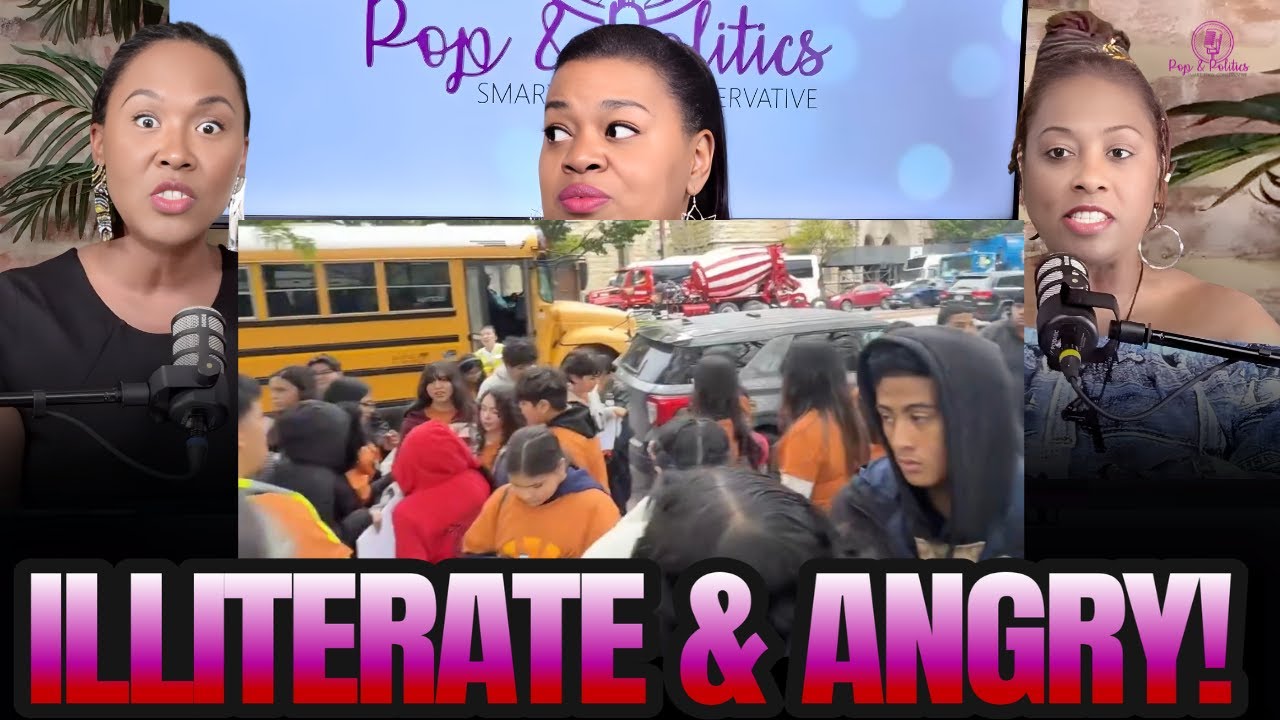
The modern Left is no longer hiding its political agenda inside America’s classrooms. On May 1, so-called “May Day Strong” protests unfolded across major cities including Chicago, New York, Los Angeles, and Washington, D.C., with activists calling for “no work, no school, and no shopping” in protest of President Donald Trump, capitalism, ICE enforcement, and what organizers labeled a “billionaire takeover” of America.
What made this year’s demonstrations different was not just the anti-capitalist rhetoric. It was the open involvement of public schools and teachers unions in pushing children into political activism.
According to reports discussed during the broadcast, Chicago Public Schools approved field trips allowing students and educators to attend May Day rallies during school hours. Organizers promoted protest curriculum materials for students as young as preschool age, encouraging children to examine protest imagery and discuss immigration enforcement and “hardships” caused by Trump’s reelection.
For many parents, this crossed a line.
Public schools were once expected to teach reading, writing, math, history, and civics. Increasingly, critics argue that many districts now prioritize activism over education. That concern becomes harder to dismiss when videos surface of elementary school teachers openly organizing protest marches, sign-making sessions, and political chants with first graders.
The deeper issue is not simply politics in schools. It is the ideological shift behind it.
May Day itself has roots tied to international socialist and communist labor movements. Historically celebrated in Soviet and Marxist regimes, the holiday became associated with collectivism, anti-capitalist demonstrations, and centralized political power. Critics argue that today’s activist movements are reviving those same themes under modern slogans about “equity,” “workers’ rights,” and “economic justice.”
That concern becomes even more serious when paired with collapsing academic performance in many urban school systems.
One of the most alarming moments discussed during the episode centered on literacy rates among American students. A teacher admitted in a viral clip that many of her students simply “can’t read.” Another segment showed high-school-age students struggling to pronounce or comprehend basic vocabulary words.
Critics say this is the unavoidable consequence of lowering standards while replacing rigorous education with political activism and emotional conditioning.
The statistics are difficult to ignore. During the discussion, panelists referenced reports showing only a fraction of Chicago students are proficient in math and reading. Yet despite those failures, teachers unions continue devoting enormous energy toward political demonstrations, immigration activism, and anti-capitalist organizing instead of academic recovery.
The funding behind many of these protests also raises serious questions.
National activist groups connected to the demonstrations reportedly include organizations such as the Democratic Socialists of America, Code Pink, and the Party for Socialism and Liberation. Several of these groups have ties to billionaire activist funding networks and openly promote socialist or Marxist ideology.
Critics argue the strategy is obvious: influence children early, normalize anti-American narratives, and create future generations emotionally driven by grievance politics rather than individual achievement and personal responsibility.
That concern extends beyond economics. The conversation also touched on the broader cultural battle over family, morality, and even life itself. During one segment, a physician challenged abortion advocates by asking a simple but devastating question: “If abortion is healthcare, what disease are you treating?”
That question reflects a larger divide in America today. One side still views family, faith, personal responsibility, and life itself as foundational pillars of civilization. The other increasingly treats those values as obstacles to political transformation.
For many urban conservatives, the battle over America’s future will not be decided in Congress first. It will be decided in classrooms, school board meetings, and local communities.
Parents who ignore what is happening inside public education may eventually discover that schools are not simply teaching children how to think anymore. They are teaching them what to believe.