

The Growing Divide Over Israel, Zionism, and Biblical Prophecy Inside Conservative Media
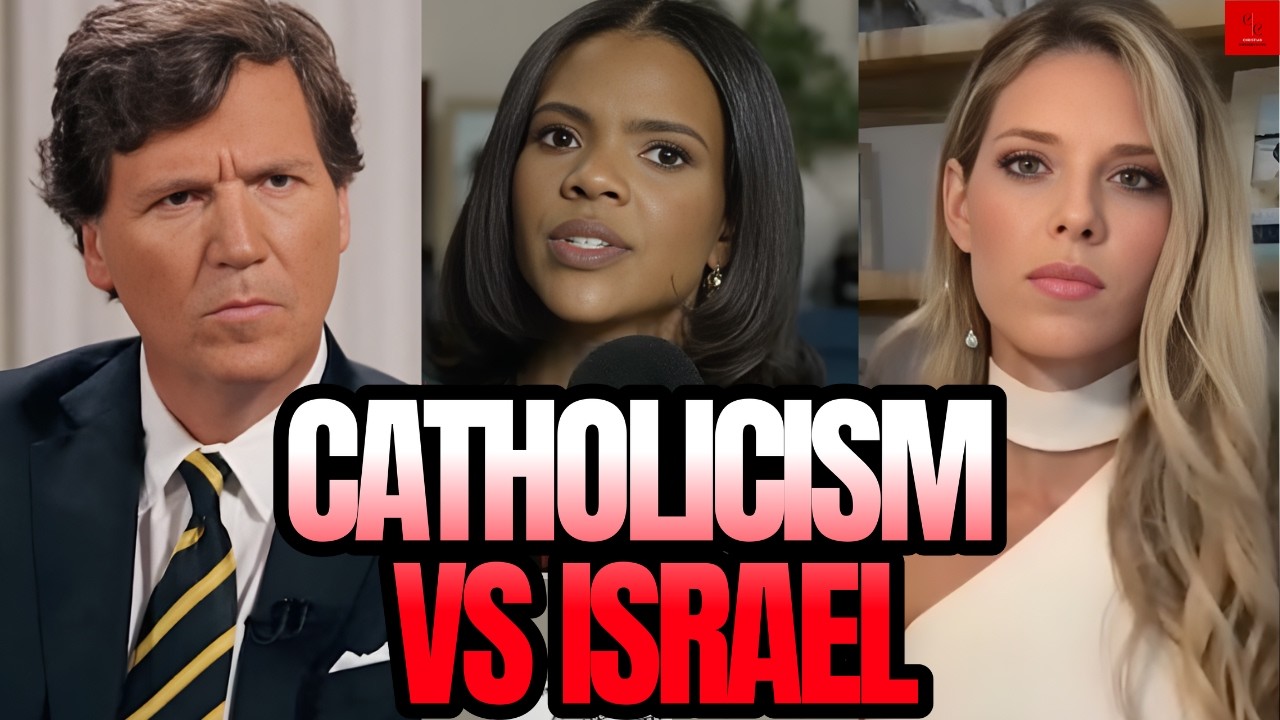
A growing faction inside conservative media is attempting to redefine how Christians view Israel, biblical prophecy, and even the foundations of Christian theology itself. Voices like Tucker Carlson, Candace Owens, and activist Carrie Prejean Boller are increasingly challenging what many evangelical Christians have long believed about Israel’s role in scripture.
The controversy exploded after Boller was removed from President Donald Trump’s Religious Liberty Commission following contentious exchanges during a hearing on antisemitism. Rather than focusing on religious liberty, the hearing quickly became a debate over Zionism, Catholic theology, and whether criticism of Israel should be considered antisemitic.
At the center of the dispute is a theological question that has divided Christians for centuries: Has the Church replaced Israel in God’s prophetic plan?
Many evangelical Christians reject that idea outright. They point to scriptures in Genesis, Isaiah, Romans, and Zechariah that repeatedly affirm God’s covenant promises to Israel remain intact. Critics of replacement theology argue that God never revoked His promises to Abraham and the Jewish people. They also note that the Apostle Paul explicitly warned in Romans 11 against believing God had abandoned Israel.
During recent interviews and conference appearances, Carlson and Owens framed modern support for Israel as largely political rather than biblical. But many Christian conservatives see that argument as misleading because it collapses two separate issues into one: support for the Jewish people and agreement with every policy of the Israeli government.
That distinction matters.
Most evangelical Christians do not claim that supporting Israel means endorsing every action taken by Prime Minister Benjamin Netanyahu or the Israeli government. Instead, they argue that recognizing Israel’s right to exist and acknowledging the Jewish connection to the land are entirely consistent with biblical teaching.
The debate intensified further when Carlson challenged Senator Ted Cruz over Genesis 12:3, the well-known verse declaring that those who bless Israel will be blessed. Critics accused Carlson of repeatedly trying to force Cruz into equating biblical Israel strictly with the modern Israeli government, even after Cruz clarified he was referring broadly to the nation and people of Israel.
Another major flashpoint involves the reestablishment of Israel in 1948. Many Christians view Israel’s return as historically and prophetically significant, citing Old Testament prophecies describing the Jewish people returning to their homeland after exile. Opponents dismiss that interpretation as modern political theology. But supporters argue that the survival and rebirth of Israel after centuries of dispersion remains one of the most extraordinary developments in world history.
The discussion also exposed deeper divisions between evangelical Christianity and Roman Catholic theology.
Boller defended what she called “fulfillment theology,” while critics argued it closely resembles replacement theology under a different label. The disagreement centers on whether the Church fulfills God’s promises to Israel spiritually or whether Israel still maintains a distinct prophetic role.
At the same time, Candace Owens drew criticism after describing emotional experiences involving Mary during a Catholic conference appearance. Many Protestant Christians viewed those comments as another example of elevating church tradition and Marian devotion above scripture and the central role of Jesus Christ as the sole mediator between God and man.
For many urban conservatives watching this debate unfold, the concern goes beyond denominational differences. The larger fear is that biblical literacy is collapsing while social media personalities increasingly shape theology through viral clips, emotional rhetoric, and political branding instead of careful study of scripture.
That is why this debate matters.
The conflict over Israel is no longer just a foreign policy discussion. It has become a test of how Christians interpret prophecy, covenant, authority, and truth itself. And as conservative media figures continue challenging long-held evangelical beliefs, more Christians are realizing they need to study scripture firsthand instead of relying on influencers, political commentators, or internet personalities to define theology for them.