

Why the Carmelo Anthony Case Is About More Than a Court Verdict
The sentencing of Carmelo Anthony in the killing of Austin Metcalf has reignited a national debate about justice, race, accountability, and forgiveness. But beneath the headlines lies a deeper question that many Americans, particularly Christians, are wrestling with: Can there be healing without repentance?
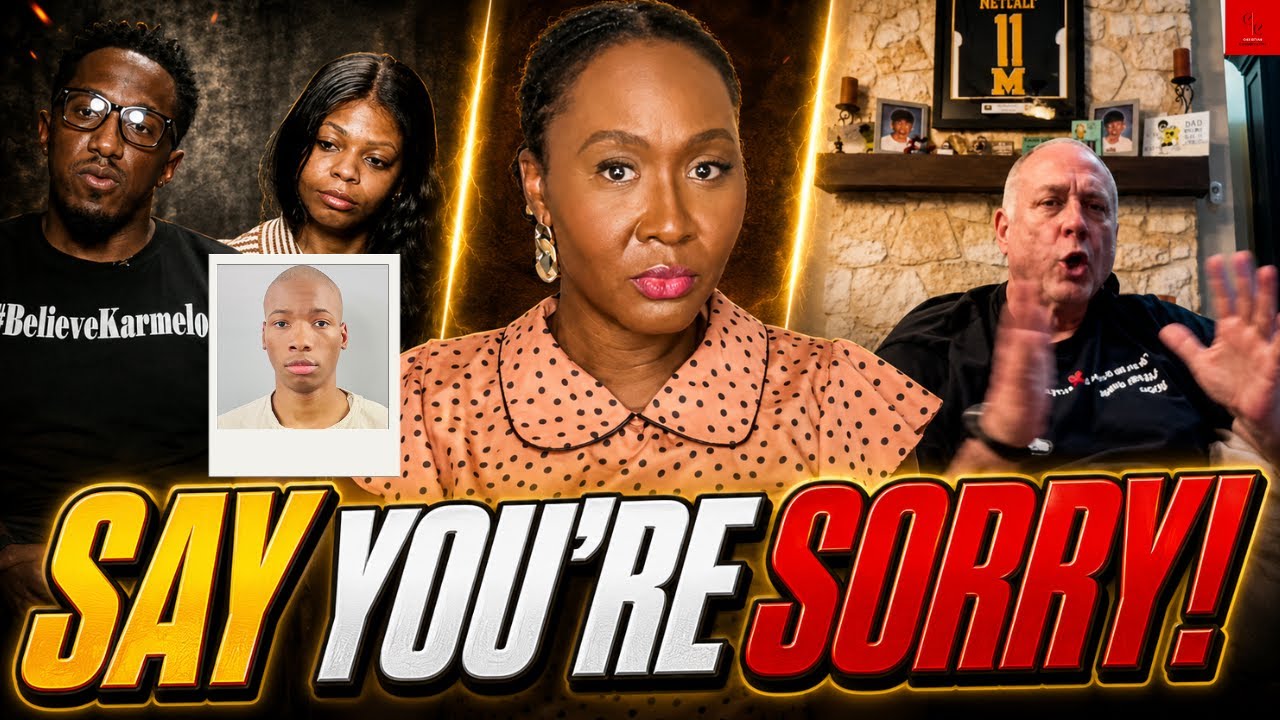
Anthony was sentenced after a case that drew intense public scrutiny and polarized reactions across social media and the news cycle. While legal arguments have largely concluded, the public conversation continues, fueled in part by recent media appearances from Anthony’s parents, who have defended their son and criticized aspects of the trial. Critics argue that one thing has been notably absent throughout those appearances: a direct apology to the Metcalf family.
For many observers, that omission has become just as significant as the legal outcome itself.
At the center of the tragedy are two devastated families. Austin Metcalf lost his life. Carmelo Anthony lost his freedom and now faces decades behind bars. Yet many Americans see a critical distinction between acknowledging shared pain and accepting responsibility.
The controversy surrounding the family’s public statements stems from what critics view as an effort to frame themselves as victims rather than confronting the consequences of their son’s actions. Throughout multiple interviews discussed in the transcript, speakers repeatedly argued that expressions of grief are not the same as repentance and that true reconciliation requires a clear acknowledgment of wrongdoing.
That distinction matters because accountability remains one of the foundational principles of both the justice system and the Christian faith.
The case has also exposed the growing tendency to view every high-profile tragedy through a racial lens. Public demonstrations, online commentary, and competing narratives have often focused more on race than on the facts of the case itself. Critics of that approach argue that justice cannot be determined by skin color, political affiliation, or tribal loyalties.
Instead, they contend that the central questions should remain straightforward: What happened? Who bears responsibility? And what does justice require?
Those questions have become increasingly difficult to answer in a culture where accountability is often viewed as optional and personal responsibility is frequently replaced with excuses.
The broader concern extends beyond this single case. Many Americans see a troubling pattern in which criminal behavior is rationalized, consequences are minimized, and victims are forgotten. Whether discussing crime, education, family breakdown, or cultural influences, critics argue that a lack of accountability is contributing to social instability.
For Christians, however, justice and mercy are not mutually exclusive concepts.
A biblical worldview allows people to support a criminal sentence while still praying for the offender. It permits compassion without abandoning truth. Forgiveness does not erase consequences, nor does mercy require ignoring wrongdoing.
That perspective is especially relevant in the Carmelo Anthony case.
Many Christians believe it is entirely possible to grieve for Austin Metcalf, support the verdict, and still pray for Anthony’s spiritual redemption. Justice addresses the crime. Mercy addresses the soul.
The challenge comes when public figures seek mercy while refusing accountability. Critics argue that reconciliation becomes impossible when responsibility is avoided, excuses are elevated, and victims are overshadowed.
The discussion also raises important questions for parents. Anthony reportedly came from a stable two-parent household, was active in sports, and performed well academically. That reality has left many searching for answers about how such a tragedy occurred. The case serves as a reminder that character formation, discipline, moral instruction, and personal responsibility remain essential regardless of economic status or educational achievement.
Why This Story Matters Beyond One Courtroom
The lasting significance of the Carmelo Anthony case is not merely the sentence itself. It is what the public response reveals about the state of American culture.
When accountability becomes controversial, justice becomes difficult to sustain. When race eclipses truth, divisions deepen. And when repentance disappears from the conversation, genuine healing becomes nearly impossible.
For Christians and conservatives alike, the lesson is simple: justice must be pursued without hatred, mercy must be extended without abandoning truth, and repentance remains the first step toward restoration.
FAQ: Key Questions Raised by the Case
Did Carmelo Anthony’s family publicly apologize to the Metcalf family?
According to the discussion in the transcript, critics argue that while expressions of sadness were offered, no direct apology or acceptance of responsibility was publicly delivered.
Can Christians support justice and still show mercy?
Yes. Christian teaching traditionally holds that legal consequences and personal forgiveness can exist simultaneously.
Why has the case become so controversial?
Beyond the legal facts, debates surrounding race, accountability, family responsibility, and public reactions have fueled ongoing national attention.
Conclusion
The Carmelo Anthony case continues to generate strong emotions because it touches on issues far larger than a single criminal conviction. It forces Americans to confront difficult questions about responsibility, justice, forgiveness, and cultural decline.
For urban conservatives, the lesson is clear: truth must come before politics, accountability must come before excuses, and healing can only begin when wrongdoing is honestly acknowledged. Until that happens, the divisions exposed by this tragedy will remain far from resolved.