

Black and Middle-Class New Yorkers Turn on Zohran Mamdani Over Race-Based Tax Proposal
New York City Democrats are once again proving that progressive politics always ends the same way: more taxes, more division, and less accountability.
This time, the controversy centers on New York City mayoral candidate Zohran Mamdani, whose latest proposal openly targets “richer and whiter neighborhoods” with higher property taxes in the name of “equity.” What began as another progressive talking point has quickly exploded into a political firestorm, especially among working-class and middle-class Black New Yorkers who say they are tired of being used as political props while their own financial burdens continue to rise.
Mamdani framed the policy as an effort to address “racial inequities” in wealth distribution across New York City. During public remarks, he pointed to statistics claiming the median white household in the city possesses significantly more wealth than the median Black household. From there, he argued the city should shift the tax burden away from outer borough homeowners and onto wealthier neighborhoods.
The problem is not simply the economics. It is the principle behind it.
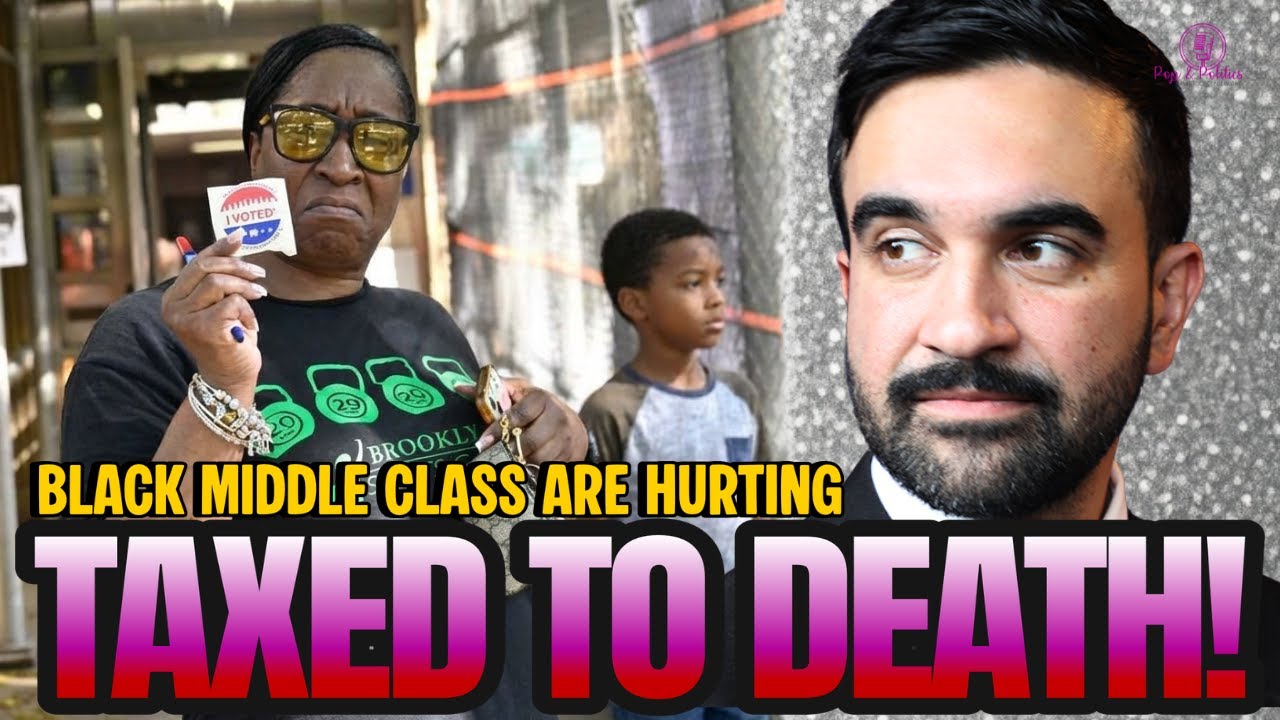
For many New Yorkers, particularly Black homeowners who worked decades to climb into the middle class, the proposal sounds less like economic reform and more like state-sponsored racial sorting. Critics argue that once government openly begins assigning tax burdens based on race or racial demographics, the country enters dangerous territory that violates both equal protection principles and basic common sense.
Even more damaging for Democrats is that the backlash is not coming solely from conservatives. Many ordinary Black voters increasingly reject the progressive assumption that every policy must revolve around race-based redistribution. These voters are dealing with the same inflation, housing costs, crime concerns, and shrinking economic opportunities affecting every other working American. They are not asking politicians to divide neighborhoods by skin color. They are asking leaders to make cities livable again.
That frustration is growing nationally.
Across major Democrat-run cities, residents are watching progressive leaders push ideological experiments while basic governance deteriorates. Crime remains elevated. Housing affordability continues collapsing. Businesses flee high-tax urban centers. Public transit systems struggle. Yet instead of addressing competence and quality of life, many progressive officials continue framing nearly every issue through racial grievance politics.
The result is predictable: more polarization and less trust.
Critics of Mamdani’s proposal also warn that race-based tax policy could trigger major legal challenges. Federal civil rights protections do not allow governments to discriminate financially against citizens based on race, even when wrapped in “equity” language. Opponents argue the plan effectively punishes one demographic group while promising relief to another, creating a precedent that would be politically explosive if reversed by future administrations.
That concern is already resonating beyond New York.
Conservatives point to California, Illinois, Maryland, and other heavily Democrat-controlled states as examples of what happens when progressive governance prioritizes ideology over economic stability. High taxes, shrinking tax bases, population loss, and declining public confidence have become recurring themes. In many urban communities, voters increasingly feel trapped between rising costs and politicians who appear more interested in social engineering than practical solutions.
The broader political risk for Democrats is obvious heading into the midterms.
Working-class voters of every race are becoming more skeptical of policies that divide Americans into competing identity groups. The political environment that once rewarded “equity” rhetoric is beginning to shift toward concerns about affordability, safety, and government overreach. Democrats who continue doubling down on race-centered economics may soon discover that many voters — including minority voters — simply want competent leadership instead of ideological activism.
Mamdani’s proposal may energize progressive activists online, but it also exposes a growing disconnect between elite political messaging and the everyday concerns of ordinary Americans trying to survive in expensive cities.
And that disconnect is becoming impossible to ignore.