

Seventh Grader Barred From Presenting Pro-Life Poem Sparks Free Speech Debate in Colorado School
A Colorado middle school is facing backlash after a seventh-grade student says she was blocked from presenting a pro-life slam poem in class while other students were reportedly allowed to discuss topics like LGBTQ activism, immigration, racial politics, and anti-gun messaging.
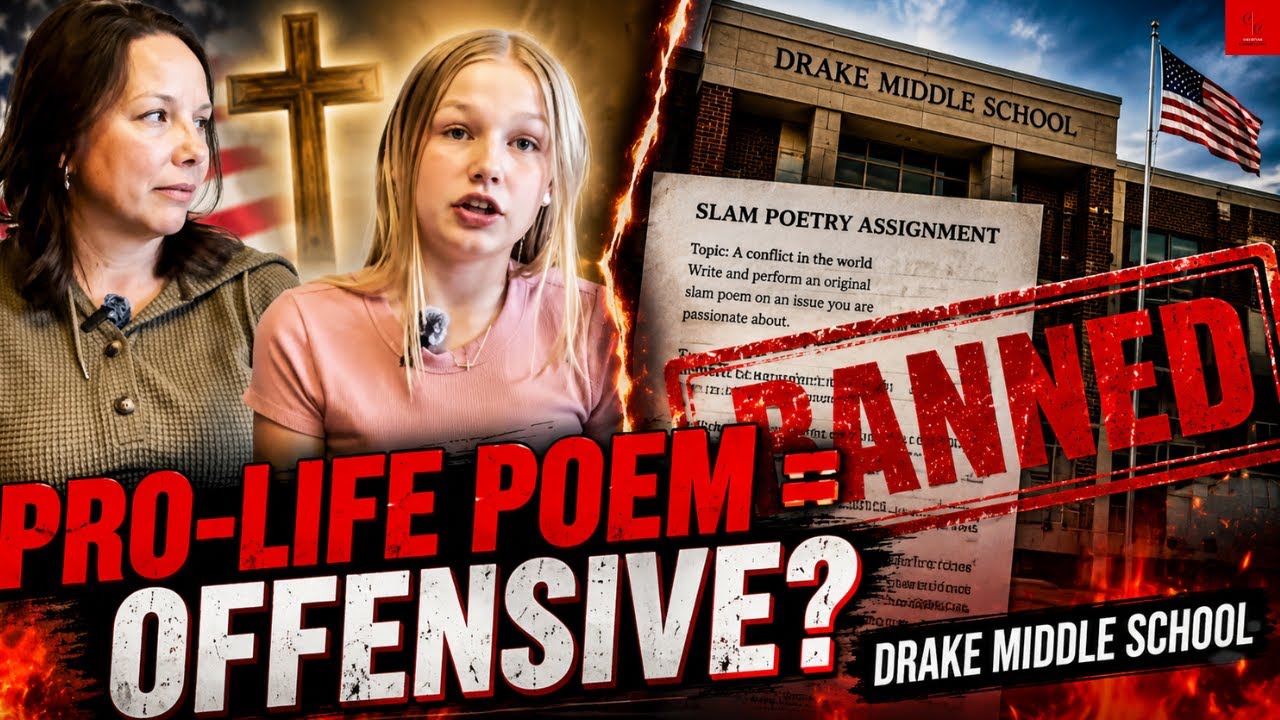
The controversy began at Drake Middle School when a student completed an assignment requiring students to write a slam poem about a global conflict they were passionate about. She chose abortion and wrote a pro-life poem rooted in both scientific claims about fetal development and biblical convictions about the sanctity of life.
According to the student and her mother, the poem met all assignment requirements. They say reputable sources were included, the work followed the teacher’s instructions, and the presentation was prepared alongside those of her classmates. But when the student asked to present the poem publicly, school officials allegedly refused.
The reason given was that the material was considered “too political” and potentially “offensive.”
That explanation immediately raised concerns from the family, especially because the class had reportedly allowed presentations involving politically charged social issues from other viewpoints. The student’s mother pushed back, arguing that the classroom environment appeared to welcome progressive activism while singling out Christian and pro-life perspectives for censorship.
The student later said she was initially told she would not even be allowed to remain inside the classroom while other students presented their own poems. Only after additional questioning was she allegedly permitted to stay and listen.
The incident has since gone viral online, reigniting a growing national debate over free speech, viewpoint discrimination, and religious expression in public schools.
At the center of the controversy is a broader question many parents are increasingly asking: Are schools teaching students how to think, or what to think?
Critics of the school’s decision argue the issue is not whether classmates agree with a pro-life viewpoint. The issue is whether schools are applying standards equally. If progressive political speech is welcomed in classrooms, they argue, then conservative or faith-based speech cannot be selectively labeled “unsafe” simply because it challenges prevailing ideological narratives.
The student’s poem itself focused heavily on the humanity of unborn children, repeatedly emphasizing the line, “A life is a life no matter how small.” The poem referenced both scripture and fetal heartbeat arguments commonly used in the pro-life movement. While critics may disagree with those arguments, supporters say disagreement alone does not justify censorship.
The case also highlights a growing cultural shift inside many American schools where traditional Christian beliefs are increasingly treated as controversial rather than commonplace. For many parents, that trend is fueling distrust in public education systems they believe are becoming politically selective in the viewpoints they permit.
The free speech concerns extend beyond abortion politics. Public schools, as government institutions, are generally expected to uphold First Amendment protections regardless of whether student viewpoints are progressive, conservative, religious, or secular. Legal experts have long argued that viewpoint discrimination occurs when schools permit speech from one ideological perspective while suppressing another.
The story gained even more traction after commentators connected it to larger national conversations surrounding religious liberty and Christian expression in public life. Former Housing and Urban Development Secretary Dr. Ben Carson recently spoke publicly about growing cultural hostility toward Christians, encouraging believers not to hide their faith despite increasing backlash.
For many urban conservative families, this Colorado classroom controversy represents something larger than a single poem assignment. It reflects growing concerns that moral convictions rooted in Christianity are being pushed to the margins while political activism from the left is normalized in schools, entertainment, media, and government institutions.
Ironically, the school’s attempt to silence the student may have amplified her message far beyond the classroom. What was originally intended for a small group of classmates has now reached millions online.
And for many Americans watching the story unfold, that outcome raises another uncomfortable question for public educators: If students are encouraged to “use their voice,” does that freedom only apply when the message aligns with approved ideology?